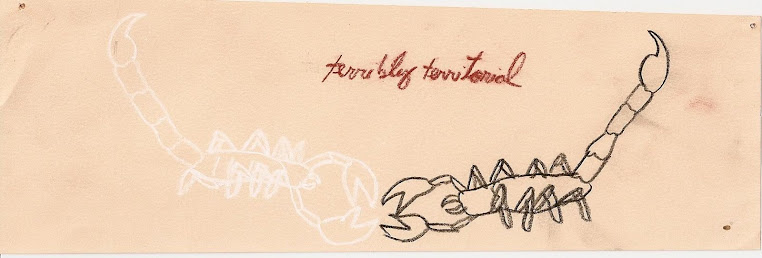
O amor sonda
entre as feridas, sonda,
procurando alguma gruta
esculpida em um osso
pelo esforço repetido
do erguer e levantar,
do corpo cansado
que desistiu de desistir.
Do chão eu saio,
Encontro novamente
a altura dos meus olhos,
o horizonte vacilante.
Eu mato cada segundo
Com a antecipação do futuro.
Não sei brincar
de viver no presente -
Os budistas me desprezam.
Eu arrasto o arado
e fixo olhar nos sulcos -
Não sei ser no presente
desesperando o futuro.
Deus me quer bem,
Eu sei, Ele me quer bem.


15.2.08
Dolores (Notre-Dame des Sept Douleurs) - A.C Swinburne
Não culpo a quem faltar o estômago para ler isso tudo, ainda mais em inglês, mas se faça um favor e leia pelo menos as 5 primeiras estrofes. A estrutura, o rítmo, as rimas, as imagens, é tudo um deleite.
If the grave-pit be shallow or deep;
And our fathers of old, and our lovers,
We shall know if they sleep not or sleep.
We shall see whether hell be not heaven,
Find out whether tares be not grain,
And the joys of thee seventy times seven,
Our Lady of Pain.
Cold eyelids that hide like a jewel
Hard eyes that grow soft for an hour;
The heavy white limbs, and the cruel
Red mouth like a venomous flower;
When these are gone by with their glories,
What shall rest of thee then, what remain,
O mystic and sombre Dolores,
Our Lady of Pain?
Seven sorrows the priests give their Virgin;
But thy sins, which are seventy times seven,
Seven ages would fail thee to purge in,
And then they would haunt thee in heaven:
Fierce midnights and famishing morrows,
And the loves that complete and control
All the joys of the flesh, all the sorrows
That wear out the soul.
O garment not golden but gilded,
O garden where all men may dwell,
O tower not of ivory, but builded
By hands that reach heaven from hell;
O mystical rose of the mire,
O house not of gold but of gain,
O house of unquenchable fire,
Our Lady of Pain!
O lips full of lust and of laughter,
Curled snakes that are fed from my breast,
Bite hard, lest remembrance come after
And press with new lips where you pressed.
For my heart too springs up at the pressure,
Mine eyelids too moisten and burn;
Ah, feed me and fill me with pleasure,
Ere pain come in turn.
In yesterday's reach and to-morrow's,
Out of sight though they lie of to-day,
There have been and there yet shall be sorrows
That smite not and bite not in play.
The life and the love thou despisest,
These hurt us indeed, and in vain,
O wise among women, and wisest,
Our Lady of Pain.
Who gave thee thy wisdom? what stories
That stung thee, what visions that smote?
Wert thou pure and a maiden, Dolores,
When desire took thee first by the throat?
What bud was the shell of a blossom
That all men may smell to and pluck?
What milk fed thee first at what bosom?
What sins gave thee suck?
We shift and bedeck and bedrape us,
Thou art noble and nude and antique; Libitina thy mother, Priapus
Thy father, a Tuscan and Greek.
We play with light loves in the portal,
And wince and relent and refrain;
Loves die, and we know thee immortal,
Our Lady of Pain.
Fruits fail and love dies and time ranges;
Thou art fed with perpetual breath,
And alive after infinite changes,
And fresh from the kisses of death;
Of languors rekindled and rallied,
Of barren delights and unclean,
Things monstrous and fruitless, a pallid
And poisonous queen.
Could you hurt me, sweet lips, though I hurt you?
Men touch them, and change in a trice
The lilies and languors of virtue
For the raptures and roses of vice;
Those lie where thy foot on the floor is,
These crown and caress thee and chain,
O splendid and sterile Dolores,
Our Lady of Pain.
There are sins it may be to discover,
There are deeds it may be to delight.
What new work wilt thou find for thy lover,
What new passions for daytime or night?
What spells that they know not a word of
Whose lives are as leaves overblown?
What tortures undreamt of, unheard of,
Unwritten, unknown?
Ah beautiful passionate body
That never has ached with a heart!
On thy mouth though the kisses are bloody,
Though they sting till it shudder and smart,
More kind than the love we adore is,
They hurt not the heart or the brain,
O bitter and tender Dolores,
Our Lady of Pain.
As our kisses relax and redouble,
From the lips and the foam and the fangs
Shall no new sin be born for men's trouble,
No dream of impossible pangs?
With the sweet of the sins of old ages
Wilt thou satiate thy soul as of yore?
Too sweet is the rind, say the sages,
Too bitter the core.
Hast thou told all thy secrets the last time,
And bared all thy beauties to one?
Ah, where shall we go then for pastime,
If the worst that can be has been done?
But sweet as the rind was the core is;
We are fain of thee still, we are fain,
O sanguine and subtle Dolores,
Our Lady of Pain.
By the hunger of change and emotion,
By the thirst of unbearable things,
By despair, the twin-born of devotion,
By the pleasure that winces and stings,
The delight that consumes the desire,
The desire that outruns the delight,
By the cruelty deaf as a fire
And blind as the night,
By the ravenous teeth that have smitten
Through the kisses that blossom and bud,
By the lips intertwisted and bitten
Till the foam has a savour of blood,
By the pulse as it rises and falters,
By the hands as they slacken and strain,
I adjure thee, respond from thine altars,
Our Lady of Pain.
Wilt thou smile as a woman disdaining
The light fire in the veins of a boy?
But he comes to thee sad, without feigning,
Who has wearied of sorrow and joy;
Less careful of labour and glory
Than the elders whose hair has uncurled;
And young, but with fancies as hoary
And grey as the world.
I have passed from the outermost portal
To the shrine where a sin is a prayer;
What care though the service be mortal?
O our Lady of Torture, what care?
All thine the last wine that I pour is,
The last in the chalice we drain,
O fierce and luxurious Dolores,
Our Lady of Pain.
All thine the new wine of desire,
The fruit of four lips as they clung
Till the hair and the eyelids took fire,
The foam of a serpentine tongue,
The froth of the serpents of pleasure,
More salt than the foam of the sea,
Now felt as a flame, now at leisure
As wine shed for me.
Ah thy people, thy children, thy chosen,
Marked cross from the womb and perverse!
They have found out the secret to cozen
The gods that constrain us and curse;
They alone, they are wise, and none other;
Give me place, even me, in their train,
O my sister, my spouse, and my mother,
Our Lady of Pain.
For the crown of our life as it closes
Is darkness, the fruit thereof dust;
No thorns go as deep as a rose's,
And love is more cruel than lust.
Time turns the old days to derision,
Our loves into corpses or wives;
And marriage and death and division
Make barren our lives.
And pale from the past we draw nigh thee,
And satiate with comfortless hours;
And we know thee, how all men belie thee,
And we gather the fruit of thy flowers;
The passion that slays and recovers,
The pangs and the kisses that rain
On the lips and the limbs of thy lovers,
Our Lady of Pain.
The desire of thy furious embraces
Is more than the wisdom of years,
On the blossom though blood lie in traces,
Though the foliage be sodden with tears.
For the lords in whose keeping the door is
That opens on all who draw breath
Gave the cypress to love, my Dolores,
The myrtle to death.
And they laughed, changing hands in the measure,
And they mixed and made peace after strife;
Pain melted in tears, and was pleasure;
Death tingled with blood, and was life.
Like lovers they melted and tingled,
In the dusk of thine innermost fane;
In the darkness they murmured and mingled,
Our Lady of Pain.
In a twilight where virtues are vices,
In thy chapels, unknown of the sun,
To a tune that enthralls and entices,
They were wed, and the twain were as one.
For the tune from thine altar hath sounded
Since God bade the world's work begin,
And the fume of thine incense abounded,
To sweeten the sin.
Love listens, and paler than ashes,
Through his curls as the crown on them slips,
Lifts languid wet eyelids and lashes,
And laughs with insatiable lips.
Thou shalt hush him with heavy caresses,
With music that scares the profane;
Thou shalt darken his eyes with thy tresses,
Our Lady of Pain.
Thou shalt blind his bright eyes though he wrestle,
Thou shalt chain his light limbs though he strive;
In his lips all thy serpents shall nestle,
In his hands all thy cruelties thrive.
In the daytime thy voice shall go through him,
In his dreams he shall feel thee and ache;
Thou shalt kindle by night and subdue him
Asleep and awake.
Thou shalt touch and make redder his roses
With juice not of fruit nor of bud;
When the sense in the spirit reposes,
Thou shalt quicken the soul through the blood.
Thine, thine the one grace we implore is,
Who would live and not languish or feign,
O sleepless and deadly Dolores,
Our Lady of Pain.
Dost thou dream, in a respite of slumber,
In a lull of the fires of thy life,
Of the days without name, without number,
When thy will stung the world into strife;
When, a goddess, the pulse of thy passion
Smote kings as they revelled in Rome;
And they hailed thee re-risen, O Thalassian,
Foam-white, from the foam?
When thy lips had such lovers to flatter;
When the city lay red from thy rods,
And thine hands were as arrows to scatter
The children of change and their gods;
When the blood of thy foemen made fervent
A sand never moist from the main,
As one smote them, their lord and thy servant,
Our Lady of Pain.
On sands by the storm never shaken,
Nor wet from the washing of tides;
Nor by foam of the waves overtaken,
Nor winds that the thunder bestrides;
But red from the print of thy paces,
Made smooth for the world and its lords,
Ringed round with a flame of fair faces,
And splendid with swords.
There the gladiator, pale for thy pleasure,
Drew bitter and perilous breath;
There torments laid hold on the treasure
Of limbs too delicious for death;
When thy gardens were lit with live torches;
When the world was a steed for thy rein;
When the nations lay prone in thy porches,
Our Lady of Pain.
When, with flame all around him aspirant,
Stood flushed, as a harp-player stands,
The implacable beautiful tyrant,
Rose-crowned, having death in his hands;
And a sound as the sound of loud water
Smote far through the flight of the fires,
And mixed with the lightning of slaughter
A thunder of lyres.
Dost thou dream of what was and no more is,
The old kingdoms of earth and the kings?
Dost thou hunger for these things, Dolores,
For these, in a world of new things?
But thy bosom no fasts could emaciate,
No hunger compel to complain
Those lips that no bloodshed could satiate,
Our Lady of Pain.
As of old when the world's heart was lighter,
Through thy garments the grace of thee glows,
The white wealth of thy body made whiter
By the blushes of amorous blows,
And seamed with sharp lips and fierce fingers,
And branded by kisses that bruise;
When all shall be gone that now lingers,
Ah, what shall we lose?
Thou wert fair in the fearless old fashion,
And thy limbs are as melodies yet,
And move to the music of passion
With lithe and lascivious regret.
What ailed us, O gods, to desert you
For creeds that refuse and restrain?
Come down and redeem us from virtue,
Our Lady of Pain.
All shrines that were Vestal are flameless,
But the flame has not fallen from this;
Though obscure be the god, and though nameless
The eyes and the hair that we kiss;
Low fires that love sits by and forges
Fresh heads for his arrows and thine;
Hair loosened and soiled in mid orgies
With kisses and wine.
Thy skin changes country and colour,
And shrivels or swells to a snake's.
Let it brighten and bloat and grow duller,
We know it, the flames and the flakes,
Red brands on it smitten and bitten,
Round skies where a star is a stain,
And the leaves with thy litanies written,
Our Lady of Pain.
On thy bosom though many a kiss be,
There are none such as knew it of old.
Was it Alciphron once or Arisbe,
Male ringlets or feminine gold,
That thy lips met with under the statue,
Whence a look shot out sharp after thieves
From the eyes of the garden-god at you
Across the fig-leaves?
Then still, through dry seasons and moister,
One god had a wreath to his shrine;
Then love was the pearl of his oyster,*
And Venus rose red out of wine.
We have all done amiss, choosing rather
Such loves as the wise gods disdain;
Intercede for us thou with thy father,
Our Lady of Pain.
In spring he had crowns of his garden,
Red corn in the heat of the year,
Then hoary green olives that harden
When the grape-blossom freezes with fear;
And milk-budded myrtles with Venus
And vine-leaves with Bacchus he trod;
And ye said, "We have seen, he hath seen us,
A visible God."
What broke off the garlands that girt you?
What sundered you spirit and clay?
Weak sins yet alive are as virtue
To the strength of the sins of that day.
For dried is the blood of thy lover,
Ipsithilla, contracted the vein;
Cry aloud, "Will he rise and recover,
Our Lady of Pain?"
Cry aloud; for the old world is broken:
Cry out; for the Phrygian is priest,
And rears not the bountiful token
And spreads not the fatherly feast. From the midmost of Ida, from shady
Recesses that murmur at morn,
They have brought and baptized her, Our Lady,
A goddess new-born.
And the chaplets of old are above us,
And the oyster-bed teems out of reach;
Old poets outsing and outlove us,
And Catullus makes mouths at our speech.
Who shall kiss, in thy father's own city,
With such lips as he sang with, again?
Intercede for us all of thy pity,
Our Lady of Pain.
Out of Dindymus heavily laden
Her lions draw bound and unfed
A mother, a mortal, a maiden,
A queen over death and the dead.
She is cold, and her habit is lowly,
Her temple of branches and sods;
Most fruitful and virginal, holy,
A mother of gods.
She hath wasted with fire thine high places,
She hath hidden and marred and made sad
The fair limbs of the Loves, the fair faces
Of gods that were goodly and glad.
She slays, and her hands are not bloody;
She moves as a moon in the wane,
White-robed, and thy raiment is ruddy,
Our Lady of Pain.
They shall pass and their places be taken,
The gods and the priests that are pure.
They shall pass, and shalt thou not be shaken?
They shall perish, and shalt thou endure?
Death laughs, breathing close and relentless
In the nostrils and eyelids of lust,
With a pinch in his fingers of scentless
And delicate dust.
But the worm shall revive thee with kisses;
Thou shalt change and transmute as a god,
As the rod to a serpent that hisses,
As the serpent again to a rod.
Thy life shall not cease though thou doff it;
Thou shalt live until evil be slain,
And good shall die first, said thy prophet,
Our Lady of Pain.
Did he lie? did he laugh? does he know it,
Now he lies out of reach, out of breath,
Thy prophet, thy preacher, thy poet,
Sin's child by incestuous Death?
Did he find out in fire at his waking,
Or discern as his eyelids lost light,
When the bands of the body were breaking
And all came in sight?
Who has known all the evil before us,
Or the tyrannous secrets of time?
Though we match not the dead men that bore us
At a song, at a kiss, at a crime--
Though the heathen outface and outlive us,
And our lives and our longings are twain--
Ah, forgive us our virtues, forgive us,
Our Lady of Pain.
Who are we that embalm and embrace thee
With spices and savours of song?
What is time, that his children should face thee?
What am I, that my lips do thee wrong?
I could hurt thee--but pain would delight thee;
Or caress thee--but love would repel;
And the lovers whose lips would excite thee
Are serpents in hell.
Who now shall content thee as they did,
Thy lovers, when temples were built
And the hair of the sacrifice braided
And the blood of the sacrifice spilt,
In Lampsacus fervent with faces,
In Aphaca red from thy reign,
Who embraced thee with awful embraces,
Our Lady of Pain?
Where are they, Cotytto or Venus,
Astarte or Ashtaroth, where?
Do their hands as we touch come between us?
Is the breath of them hot in thy hair?
From their lips have thy lips taken fever,
With the blood of their bodies grown red?
Hast thou left upon earth a believer
If these men are dead?
They were purple of raiment and golden,
Filled full of thee, fiery with wine,
Thy lovers, in haunts unbeholden,
In marvellous chambers of thine.
They are fled, and their footprints escape us,
Who appraise thee, adore, and abstain,
O daughter of Death and Priapus,
Our Lady of Pain.
What ails us to fear overmeasure,
To praise thee with timorous breath,
O mistress and mother of pleasure,
The one thing as certain as death?
We shall change as the things that we cherish,
Shall fade as they faded before,
As foam upon water shall perish,
As sand upon shore.
If the grave-pit be shallow or deep;
And our fathers of old, and our lovers,
We shall know if they sleep not or sleep.
We shall see whether hell be not heaven,
Find out whether tares be not grain,
And the joys of thee seventy times seven,
Our Lady of Pain.
8.2.08
Amplexo
"There is a panther stalks me down:
One day I'll have my death of him;"
- Pursuit - Sylvia Plath
Aquele instante recendia um perfume vago da infância, das coisas muito antigas guardadas em gavetas que nunca são abertas. Não era o espaço, o lugar não lhe era familiar, era algo no corpo dele que vinha à tona por entre camadas e camadas de outros tempos e outros espaços. Vê-lo nu, de costas; a visão era reconfortante como encontrar, intacta, a paisagem abandonada de sua cidade natal. Agora enxergava ele como um emaranhado de músculos e pêlos. Não via nele membros ou cores, via um animal, um carnívoro de sangue quente que, por motivos misteriosos e inatos, respeitava a integridade do corpo dela, o corpo dela que, branco e morno, se aninhava contra aquele dínamo feito de pêlos e músculos. Sentia-se como uma criança criada por animais selvagens, vivendo a maravilhosa bênção de ser bem quista pelas coisas que poderiam matá-la. Imaginava uma selva de caminhos estreitos que levavam à grandes clareiras. Às vezes era uma floresta de coníferas, como as dos romances de Jack London, e às vezes era um terreno derivado da jungle à la Kipling. Mas as passagens sempre eram estreitas, sendo cercadas por pinheiros de cascas ásperas ou bromélias, e ela se espremia e se esfregava contra a pelagem macia dos animais.
Outras coisas alimentavam aquela percepção animalesca que ela agora desenvolvia, com os olhos cheios daquele homem que dormia ao alcance das suas mãos, enlaçado por uma de suas pernas. O grunhido seco e gutural que ele emitia quando faziam amor, assim como a forma como mordia os lábios e mostrava os dentes franzindo o nariz. Estar à mercê daquele animal de olhos acesos e mandíbula tensa, ter o privilégio de ser cativa daquele corpo forte, tão maciço que ele às vezes transparecia o cansaço de carrega-lo. Ela roçava o corpo contra o dele, distrinçando a sua sorte, elegendo-se feliz e fiel, bela e devota, sentindo que seu peito, encostado contra aquelas costas largas, palpitava no mesmo ritmo do ressonar tranquilo. Aquele sentimento imperscrutável movia cada desígno amoroso, cada entrega que trilhava aquela redescoberta da sua vocação para o amor, a inclinação vertiginosa para a doçura.
One day I'll have my death of him;"
- Pursuit - Sylvia Plath
Aquele instante recendia um perfume vago da infância, das coisas muito antigas guardadas em gavetas que nunca são abertas. Não era o espaço, o lugar não lhe era familiar, era algo no corpo dele que vinha à tona por entre camadas e camadas de outros tempos e outros espaços. Vê-lo nu, de costas; a visão era reconfortante como encontrar, intacta, a paisagem abandonada de sua cidade natal. Agora enxergava ele como um emaranhado de músculos e pêlos. Não via nele membros ou cores, via um animal, um carnívoro de sangue quente que, por motivos misteriosos e inatos, respeitava a integridade do corpo dela, o corpo dela que, branco e morno, se aninhava contra aquele dínamo feito de pêlos e músculos. Sentia-se como uma criança criada por animais selvagens, vivendo a maravilhosa bênção de ser bem quista pelas coisas que poderiam matá-la. Imaginava uma selva de caminhos estreitos que levavam à grandes clareiras. Às vezes era uma floresta de coníferas, como as dos romances de Jack London, e às vezes era um terreno derivado da jungle à la Kipling. Mas as passagens sempre eram estreitas, sendo cercadas por pinheiros de cascas ásperas ou bromélias, e ela se espremia e se esfregava contra a pelagem macia dos animais.
Outras coisas alimentavam aquela percepção animalesca que ela agora desenvolvia, com os olhos cheios daquele homem que dormia ao alcance das suas mãos, enlaçado por uma de suas pernas. O grunhido seco e gutural que ele emitia quando faziam amor, assim como a forma como mordia os lábios e mostrava os dentes franzindo o nariz. Estar à mercê daquele animal de olhos acesos e mandíbula tensa, ter o privilégio de ser cativa daquele corpo forte, tão maciço que ele às vezes transparecia o cansaço de carrega-lo. Ela roçava o corpo contra o dele, distrinçando a sua sorte, elegendo-se feliz e fiel, bela e devota, sentindo que seu peito, encostado contra aquelas costas largas, palpitava no mesmo ritmo do ressonar tranquilo. Aquele sentimento imperscrutável movia cada desígno amoroso, cada entrega que trilhava aquela redescoberta da sua vocação para o amor, a inclinação vertiginosa para a doçura.
30.1.08
Olvido
Enquanto
(....)
As
3.1.08
It's been a good year for the roses
Lista de livros lidos em 2007
Quase esqueci de fazer essa gracinha anual, mas Mr. Marona (que, por ocasião de uma festinha, revelou-se um gracioso anfitrião) me lembrou. Here we go:
1- História Sexual da MPB - Rodrigo Faor
2- Contos de Maldoror - Lautreamont
3- Semana - Diversos (organização de Natércia Pontes - www.natercia.blogspot.com)
4- O amor e outros objetos pontiagudos - Marçal de Aquino
5- The Book of Longing - Leonard Cohen
6- História da Pintura Moderna - Herbert Read
7- A História da Arte - Gombrich
8- Flores do Mal - Baudelaire
9- Fragmentos de um discurso amoroso - Roland Barthes
10- Iracema - José de Alencar
11- Poemas e Fragmentos - Safo de Lesbos
12- Serial e Antes - João Cabral de Melo Neto
13- El Aleph - Borges
14- Cien Años de Soledad - Gabriel G. M.
15- D. Pedro II - José Murilo de Carvalho
16- Quando fui outro - Fernando Pessoa
17- Guerra Y Pá - transcrição de seminário sobre arte colombiana
18- Music and the Mind - Anthony Storr
19- Tropic of Cancer - Henry Miller
20- Collected Poems - Sylvia Plath
21- Collected Poems - John Donne
22- Madame Bovary - Flaubert
Quase esqueci de fazer essa gracinha anual, mas Mr. Marona (que, por ocasião de uma festinha, revelou-se um gracioso anfitrião) me lembrou. Here we go:
1- História Sexual da MPB - Rodrigo Faor
2- Contos de Maldoror - Lautreamont
3- Semana - Diversos (organização de Natércia Pontes - www.natercia.blogspot.com)
4- O amor e outros objetos pontiagudos - Marçal de Aquino
5- The Book of Longing - Leonard Cohen
6- História da Pintura Moderna - Herbert Read
7- A História da Arte - Gombrich
8- Flores do Mal - Baudelaire
9- Fragmentos de um discurso amoroso - Roland Barthes
10- Iracema - José de Alencar
11- Poemas e Fragmentos - Safo de Lesbos
12- Serial e Antes - João Cabral de Melo Neto
13- El Aleph - Borges
14- Cien Años de Soledad - Gabriel G. M.
15- D. Pedro II - José Murilo de Carvalho
16- Quando fui outro - Fernando Pessoa
17- Guerra Y Pá - transcrição de seminário sobre arte colombiana
18- Music and the Mind - Anthony Storr
19- Tropic of Cancer - Henry Miller
20- Collected Poems - Sylvia Plath
21- Collected Poems - John Donne
22- Madame Bovary - Flaubert
18.12.07
Beautiful Texugo

Queria
Vê-los
(dar-lhes
Looking back at
O triste negar do olhar,
De
Looking back at
Belíssimo
A
As
E
E
Staring back at
Olhei
E estudei,
A
A
A
Da
A
De
19.11.07
Exílio
Existe algo de triste e confortável na constelação de coisinhas que eu faço acontecer no tédio que antecede a chegada do sono. Eu como alguma coisa, eu assisto televisão para não pensar em nenhuma de todas as coisas em que eu tenho que pensar. Sinto desejo de fumar um charuto. Toco violão. Leio um pouco. Me forço a escrever.
Hoje é dia 15 de novembro, penso no desgosto de Pedro D’Alcântara, prestes a embarcar para o exílio. No espaço entre as estrelas da minha constelação de coisinhas a palavra “exílio” respira. Ela me persegue, faz algumas semanas, com as palmeiras e os sabiás daquele poema que o meu pai me leu na mesa de um restaurante, já fazem muitos anos. Gonçalves Dias tem a história mais triste: Morreu no naufrágio do barco que o trazia de volta à pátria.
Eu nego o nome da minha solidão. Dou-lhe novas alcunhas: “descanso”, “tédio”, “fracasso”. Não quero sair e encarar o mundo nesse dia chuvoso, porém tão pouco quero ficar só. Quero que o mundo todo venha para onde já estou, silencioso, calmo, respeitoso. Quero alguém que vele o meu sono. A voluntariedade do meu exílio não nega o seu significado. A minha vontade de ser só não nega a minha solidão. Eu nego e pago, cabeça erguida e olhos baixos, eu nego e pago.
Hoje é dia 15 de novembro, penso no desgosto de Pedro D’Alcântara, prestes a embarcar para o exílio. No espaço entre as estrelas da minha constelação de coisinhas a palavra “exílio” respira. Ela me persegue, faz algumas semanas, com as palmeiras e os sabiás daquele poema que o meu pai me leu na mesa de um restaurante, já fazem muitos anos. Gonçalves Dias tem a história mais triste: Morreu no naufrágio do barco que o trazia de volta à pátria.
Eu nego o nome da minha solidão. Dou-lhe novas alcunhas: “descanso”, “tédio”, “fracasso”. Não quero sair e encarar o mundo nesse dia chuvoso, porém tão pouco quero ficar só. Quero que o mundo todo venha para onde já estou, silencioso, calmo, respeitoso. Quero alguém que vele o meu sono. A voluntariedade do meu exílio não nega o seu significado. A minha vontade de ser só não nega a minha solidão. Eu nego e pago, cabeça erguida e olhos baixos, eu nego e pago.
Como esquecer a pessoa amada em 5 minutos
“Es tan corto el amor, y es tan largo el olvido” – Pablo Neruda
Idéia para performance - e idéias em geral.
Esse não é exatamente o exercício do esquecimento – está mais para o exercício do desapego. O esquecimento nada é além da mais extrema forma de desapego, o desapegar-se das próprias memórias. É o agonizante construir da ponte que te leva à outra margem desconhecida.
Esquecer é preciso, esquecer é impossível. Podemos, no máximo, deixar para trás, abandonar. Você pode se convencer da necessidade básica de deixar algo para trás, porém esquecer está além do seu alcance. Você pode apenas não pegar o telefone, não olhar as fotos, não ouvir a canção.
Mas eu ouço uma canção agora, uma canção para mim nova – “Donde Habita El Olvido”, de Joaquín Sabina. Não me interessa tanto saber onde mora o esquecimento (no fundo da garrafa? Na gaveta para a qual se perdeu a chave?), mas qual o caminho mais curto para se chegar lá.
Em um poste, sob o resultado do jogo do bicho, eu vejo um cartaz que promete: “Trago a Pessoa Amada Em 4 Dias”. A promessa está espalhada por toda a cidade. Às vezes é entregue em mãos, às vezes pintada em muros. Já fiquei tentada a procurar uma das mães-de-santo autoras da expectativa de dádiva. Nunca fui, pois meu desejo não era o recomeço, e sim a obliteração de um sentimento ligado a uma pessoa. A possibilidade de redirecionar o amor; dar-lhe outros olhos, outros lábios, outro corpo. O desejo de não desejar talvez seja o mais impotente e aflitivo de todos os desejos.
E talvez a feitiçaria seja a solução. O encanto para quebrar o encanto, um despacho para despachar um sentimento. Crio o meu ritual – é uma espécie de “macumba”, um tipo de sangria, expurgamento com método e finalidade – eu sei exatamente o que eu quero tirar de mim. Não gosto de usar a palavra catarse - talvez por mera implicância (tantas performances se dizem catárticas), mas também pelo fato do meu feitiço ser muito específico, muito bem planejado.
A performance acontece em uma encruzilhada pela força mística desse tipo de lugar – e uma referência aos despachos de Umbanda, que são uma forma de feitiçaria viva nas ruas e no imaginário popular. Penso em Robert Johnson, que vendeu a alma em uma encruzilhada. Me parece um lugar perigoso.
A bandeja prateada é, para mim, uma referência à princesa Salomé, que matou o que ela desejava por não poder possuí-lo. Os objetos que são, um de cada vez, depositados sobre ela, tem significados pessoais, mas relacionáveis – o buquê de rosas vermelhas (o presente do amante), as cartas de amor rasgadas (ridículas, como todas as cartas de amor), fotografias (a alma roubada), um chumaço das pontas do meu cabelo (jogar fora as pontas mortas), sangue (que eu pensei em derramar por desespero). Ex-votos do desejo de não mais desejar. Sobre tudo isso será derramado um vidro de perfume, que será o combustível para as chamas que irão consumar os objetos e, metaforicamente, purgar o sentimento.
Previamente a realização da performance, serão distribuídas filipetas que anunciaram o local e a hora do acontecimento. No verso desse panfleto estarão as instruções que devem ser seguidas para a realização do ritual. A minha performance pode ser vista como uma demonstração prática do método, e não só uma manifestação pessoal, pois o fato do ritual seguir uma “receita” prática permite que ele seja executado por outras pessoas, em outros momentos.
A meu ver, a atitude de por em um lugar público algo extremamente privado gera a possibilidade de reconhecimento e validação do sentimento. Vejo a performance como canção, pelas possibilidades de comunicação emotivas que são extremamente poderosas na forma de melodia, ritmo, harmonia e letra. O cantar sobre o que é de si e dos outros para os outros – a consagração da universalidade do sentimento e da arte como veículo da emoção, das coisas que acontecem entre o púbis e a garganta.
“Es tan corto el amor, y es tan largo el olvido” – Pablo Neruda
Idéia para performance - e idéias em geral.
Esse não é exatamente o exercício do esquecimento – está mais para o exercício do desapego. O esquecimento nada é além da mais extrema forma de desapego, o desapegar-se das próprias memórias. É o agonizante construir da ponte que te leva à outra margem desconhecida.
Esquecer é preciso, esquecer é impossível. Podemos, no máximo, deixar para trás, abandonar. Você pode se convencer da necessidade básica de deixar algo para trás, porém esquecer está além do seu alcance. Você pode apenas não pegar o telefone, não olhar as fotos, não ouvir a canção.
Mas eu ouço uma canção agora, uma canção para mim nova – “Donde Habita El Olvido”, de Joaquín Sabina. Não me interessa tanto saber onde mora o esquecimento (no fundo da garrafa? Na gaveta para a qual se perdeu a chave?), mas qual o caminho mais curto para se chegar lá.
Em um poste, sob o resultado do jogo do bicho, eu vejo um cartaz que promete: “Trago a Pessoa Amada Em 4 Dias”. A promessa está espalhada por toda a cidade. Às vezes é entregue em mãos, às vezes pintada em muros. Já fiquei tentada a procurar uma das mães-de-santo autoras da expectativa de dádiva. Nunca fui, pois meu desejo não era o recomeço, e sim a obliteração de um sentimento ligado a uma pessoa. A possibilidade de redirecionar o amor; dar-lhe outros olhos, outros lábios, outro corpo. O desejo de não desejar talvez seja o mais impotente e aflitivo de todos os desejos.
E talvez a feitiçaria seja a solução. O encanto para quebrar o encanto, um despacho para despachar um sentimento. Crio o meu ritual – é uma espécie de “macumba”, um tipo de sangria, expurgamento com método e finalidade – eu sei exatamente o que eu quero tirar de mim. Não gosto de usar a palavra catarse - talvez por mera implicância (tantas performances se dizem catárticas), mas também pelo fato do meu feitiço ser muito específico, muito bem planejado.
A performance acontece em uma encruzilhada pela força mística desse tipo de lugar – e uma referência aos despachos de Umbanda, que são uma forma de feitiçaria viva nas ruas e no imaginário popular. Penso em Robert Johnson, que vendeu a alma em uma encruzilhada. Me parece um lugar perigoso.
A bandeja prateada é, para mim, uma referência à princesa Salomé, que matou o que ela desejava por não poder possuí-lo. Os objetos que são, um de cada vez, depositados sobre ela, tem significados pessoais, mas relacionáveis – o buquê de rosas vermelhas (o presente do amante), as cartas de amor rasgadas (ridículas, como todas as cartas de amor), fotografias (a alma roubada), um chumaço das pontas do meu cabelo (jogar fora as pontas mortas), sangue (que eu pensei em derramar por desespero). Ex-votos do desejo de não mais desejar. Sobre tudo isso será derramado um vidro de perfume, que será o combustível para as chamas que irão consumar os objetos e, metaforicamente, purgar o sentimento.
Previamente a realização da performance, serão distribuídas filipetas que anunciaram o local e a hora do acontecimento. No verso desse panfleto estarão as instruções que devem ser seguidas para a realização do ritual. A minha performance pode ser vista como uma demonstração prática do método, e não só uma manifestação pessoal, pois o fato do ritual seguir uma “receita” prática permite que ele seja executado por outras pessoas, em outros momentos.
A meu ver, a atitude de por em um lugar público algo extremamente privado gera a possibilidade de reconhecimento e validação do sentimento. Vejo a performance como canção, pelas possibilidades de comunicação emotivas que são extremamente poderosas na forma de melodia, ritmo, harmonia e letra. O cantar sobre o que é de si e dos outros para os outros – a consagração da universalidade do sentimento e da arte como veículo da emoção, das coisas que acontecem entre o púbis e a garganta.
4.11.07
25.10.07
20.10.07
Hoje, em um bar no Jardim Botânico, eu falei para um amigo estrangeiro sobre as belezas de Manuel Bandeira. Em um afã eu recitei um poema do Bandeira, o único poema que eu sei de cor, "Desencanto":
Hoje, chegando em casa depois do bar, senti a nostalgia de ler Bandeira. E li Bandeira, e resolvi ler sobre o Bandeira. Não li nada que eu não soubesse, apenas uma coisa - a data de sua morte. Ele morreu 18 de Outubro, ontem. Fiquei meio pasmada, porque é a data do aniversário da minha irmã, e senti novamente o afã que me invadiu na mesa de bar e que me fez ler e reler esse poema.
Quando eu li o poema, aos doze anos de idade, eu começei a escrever. Talvez tenha sido no dia seguinte, talvez nas horas seguintes, talvez uma semana depois. Mas ali eu começei a escrever.
J.
Eu faço versos como quem chora
De desalento... de desencanto...
Fecha meu livro, se por agora
Não tens motivo nenhum de pranto.
Meu verso é sangue. Volúpia ardente...
Tristeza esparsa... remorso vão...
Dói-me nas veias. Amargo e quente,
Cai, gota a gota, do coração.
E nestes versos de angústia rouca
Assim dos lábios a vida corre,
Deixando um acre sabor na boca.
– Eu faço versos como quem morre.
(Manuel Bandeira – A Cinza das Horas – Teresópolis, 1912)
Eu li esse poema pela primeira vez quando eu tinha 12 anos - li no Estrela da Vida Inteira, um livro de capa púrpura que me acompanhou pelo resto da vida. Li, reli e decorei, sem querer, querendo.Hoje, chegando em casa depois do bar, senti a nostalgia de ler Bandeira. E li Bandeira, e resolvi ler sobre o Bandeira. Não li nada que eu não soubesse, apenas uma coisa - a data de sua morte. Ele morreu 18 de Outubro, ontem. Fiquei meio pasmada, porque é a data do aniversário da minha irmã, e senti novamente o afã que me invadiu na mesa de bar e que me fez ler e reler esse poema.
Quando eu li o poema, aos doze anos de idade, eu começei a escrever. Talvez tenha sido no dia seguinte, talvez nas horas seguintes, talvez uma semana depois. Mas ali eu começei a escrever.
J.
19.10.07
3.10.07
Cien Años de Soledad
"Había perdido en la espera la fuerza de los muslos, la dureza de los senos, el hábito de la ternura, pero convervaba intacta la locura del corazón."
Foda, né?
Foda, né?
25.9.07
Catumbi
Eu viajo:
malas feitas,
postes passam.
E o doce balanço
da estrada repete:
"O mundo não passa
de um enorme Catumbi".
Em terra estrangeira
conto moedas estranhas
e brigo com o idioma local.
No Hilton de Puerto Madero,
no Red Roof Inn de Memphis,
O Mississippi e o De La Plata
Sussurraram a cantiga -
"O mundo não passa
de um enorme Catumbi".
Em Barbacena
eu estou na fila
para ver uma rosa negra.
Encaro a bichinha
pintada de anilina.
E como um raio
me atinge:
"O mundo não passa
de um enorme Catumbi".
Um dia eu dormi no ônibus,
eu perdi o ponto.
O trocador me sacudiu -
Ponto Final!-
Não deu outra:
Catumbi.
malas feitas,
postes passam.
E o doce balanço
da estrada repete:
"O mundo não passa
de um enorme Catumbi".
Em terra estrangeira
conto moedas estranhas
e brigo com o idioma local.
No Hilton de Puerto Madero,
no Red Roof Inn de Memphis,
O Mississippi e o De La Plata
Sussurraram a cantiga -
"O mundo não passa
de um enorme Catumbi".
Em Barbacena
eu estou na fila
para ver uma rosa negra.
Encaro a bichinha
pintada de anilina.
E como um raio
me atinge:
"O mundo não passa
de um enorme Catumbi".
Um dia eu dormi no ônibus,
eu perdi o ponto.
O trocador me sacudiu -
Ponto Final!-
Não deu outra:
Catumbi.
21.9.07
El Califa De Laguahara
O último da triologia em espanhol.
Las fronteras de ese reino
Son dictadas por el viento.
Escorpións descansan
Bajo las piedras.
Una gente nerviosa
De jeribeques* tristes
Camina entre las dunas
Mirando el suelo.
Hacia el este existe
Un bosque de lentiscos** desnudos;
Hasta el oeste
Un pozo dónde las cabras se ahojan.
En direccíon al sur
Un gran faro
Y, al norte,
El mar.
El trono del califa encubre
El inconstante jadear*** del reino.
La gente camina,
El faro brilla,
El mar oscila y canta.
El califa duerme.
_____________________________
*jeribeques - trejeitos
**lentiscos- aroeiras
***jadear - arfar
Las fronteras de ese reino
Son dictadas por el viento.
Escorpións descansan
Bajo las piedras.
Una gente nerviosa
De jeribeques* tristes
Camina entre las dunas
Mirando el suelo.
Hacia el este existe
Un bosque de lentiscos** desnudos;
Hasta el oeste
Un pozo dónde las cabras se ahojan.
En direccíon al sur
Un gran faro
Y, al norte,
El mar.
El trono del califa encubre
El inconstante jadear*** del reino.
La gente camina,
El faro brilla,
El mar oscila y canta.
El califa duerme.
_____________________________
*jeribeques - trejeitos
**lentiscos- aroeiras
***jadear - arfar
17.9.07
El Emir Del Bueno Amor
Acho que vou fazer uma triologia de poemas em espanhol só com títulos de autoridades do mundo islãmico. Psicodélico, Borgiano, eu sei, mas eu também li as Mil e Uma Noites.
Entre el desierto
Y el más bello espejismo
Encontrábase el palacio.
Allí él fue bautizado
Y recibió su nuevo nombre
De los labios de una mujer.
(La cortesana de un reino partido)
No lo fue revelado,
Lo que él quería tener
No podía ser poseído.
Se quedó
Bajo las garras de un tigre:
Un flagelo inútil.
El sol cegó sus ojos,
Las escarpas conspiraban.
14.9.07
Cultura Afro é o Escambau
Eu não costumo escrever textos de não-ficção e, como eu não consigo considerar não-ficção como literatura, eu acabo escrevendo como eu falo.
Cultura Afro é o Escambau
A nossa auto-depreciação enquanto povo é tão ridícula que nós queremos dar crédito que é nosso aos outros – eu estou cansada do termo “cultura afro”. Em primeiro lugar porque a África não é um país, e sim um continente, e se referir a ela como uma massa cultural única é, no mínimo, estúpido. De quem estamos falando? Dos negros mulçumanos do Sudão? Dos egípcios? Dos iorubas de Benin e da Nigéria?
Existe um forte movimento hoje de qualificar coisas brasileiras, coisas maravilhosas que pertencem ao nosso povo, como uma representação da cultura africana. Samba não é afro-brasileiro. É brasileiro, ponto, foi feito aqui, não chegou pronto. Muitos dos mesmos povos que desembarcaram no Brasil (todos da costa ocidental da África), também chegaram em outros lugares –Cuba, por exemplo. Lá deu mambo e salsa, aqui deu samba. É lógico que o samba não existiria sem os povos negros, mas também não existiria sem os índios (que recebem tão pouco crédito pela nossa cultura), os portugueses, etc. Será que para valorizar uma cor de pele a gente precisa depreciar uma nação inteira? Porque não se diz simplesmente “cultura brasileira”, o que inclui absolutamente todos nós? Isso é só mais um sintoma da legendária baixa-estima do povo brasileiro – a gente prefere dar crédito a um outro continente do que a nós mesmos (“pra ser bom tem que ter vindo de fora”). E, mais uma vez, a merda da teoria da jabuticaba prevalece.
No Brasil nós estamos tão preocupados em categoricamente “gongar” o nosso patrimônio histórico, que nem paramos para ver o que a gente tem de bom, e como é que isso foi feito. A gente tem que estar aplaudindo Pedro I, que brigou com tudo e todos para ficar aqui, nesse país; mas nós dispensamos esse ato que não demonstra nada além de bravura para acreditar que ele tinha interesses escusos. Nós devíamos estar tirando o chapéu para Pedro II, que sofreu para aprender Guarani. Ele precisava saber guarani? Não. Mas a gente prefere descartar ele como um “banana”. Marechal Rondon é outro. O cara passou a vida inteira tentando estabelecer relações pacíficas com diversas tribos, muitas das quais queriam ver ele escalpelado. Zumbi é outro - um herói brasileiro, não um herói africano. Ele nasceu em Pernambuco, né?
A gente muito que melhorar, mas para melhorar é preciso acreditar nesse país – e acreditar nesse país significa valorizar o que veio antes da gente. E o que está aqui agora também. Quem fala mal de funcionário público? Todo mundo. Quem é aquela gente no INCA, no Itamaraty, na Fundação Oswaldo Cruz? Funcionários públicos. Essa gente dá o exemplo diariamente – e quando você chama a atenção para o bom exemplo ele, muito lentamente, se torna o que é esperado. Enquanto depreciar for mais importante que apreciar, as coisas não melhorarão.
13.9.07
Ghost Buster
Saca só: eu baixei um bagulhinho que deixa eu ver quantas visitas ocorreram no meu blog. Eu sai de casa hoje e tinha 1 (eu mesma), voltei e tinham 6. Cadê essa gente que não se manifesta? Pô, bora dar nome aos bois, pueblo!
4.9.07
El derviche del tesoro triste
Abafando no español...
Bílis espesa
Bílis sucia
Bílis negra envenenada
Lo que entra
Ya no cura,
Bílis espesa
Bílis sucia
Bílis negra envenenada
Lo que entra
Ya no cura,
La sangría es necesaria
El cuchillo
Y el cuenco
La sangría es necesaria
Sangre preso,
Sangre lodo,
Él precisa salir
En el hocico
De un lobo,
En la espada
Del visir.
Efendi, efendi,
Yo destruí un sueño:
Mi derviche
Del tesoro triste,
Mi cariño, mi esfinge.
Assinar:
Postagens (Atom)
